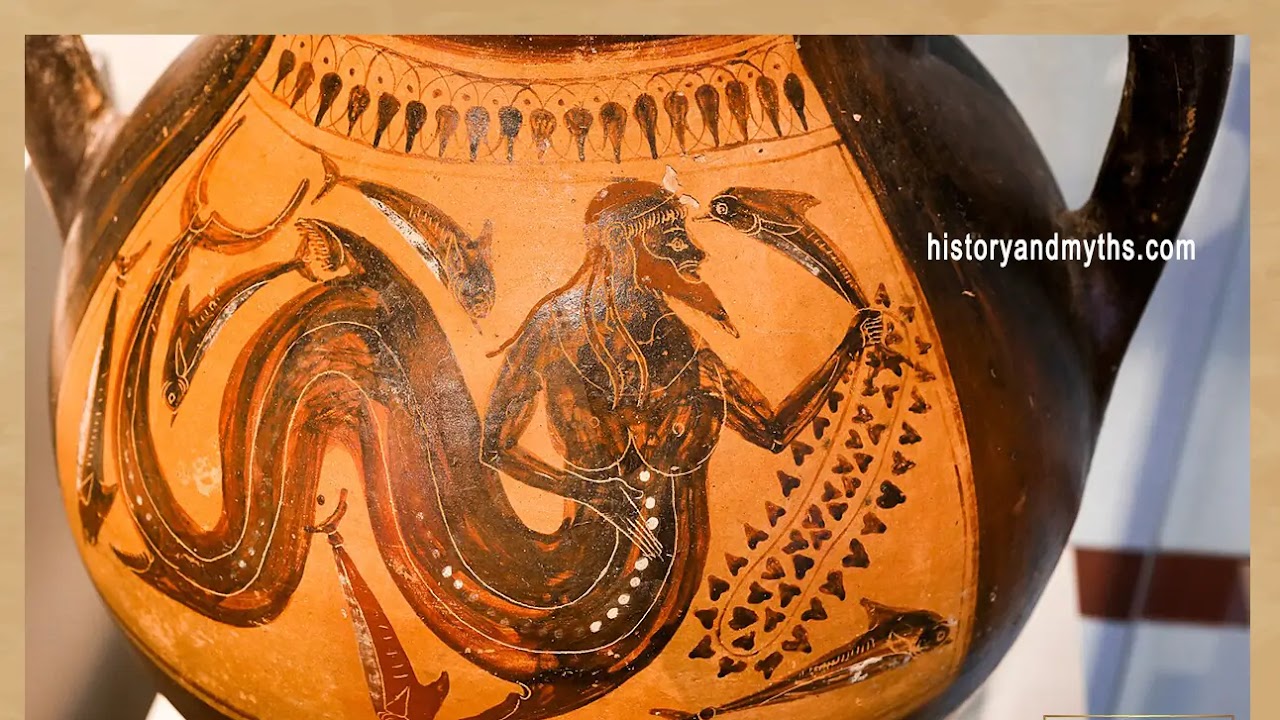
Triton Revealed: The Son of Poseidon, Greek Sea God
In the vast and enchanting world of Greek mythology, a pantheon of powerful deities governs every aspect of existence, from the highest heavens to the deepest abysses. Among the most formidable is Poseidon, the mighty ruler of the seas. Yet, even great gods have kin, and few are as intriguing and emblematic of the ocean's mystical allure as his son, Triton. Often sought after by scholars and crossword enthusiasts alike, the answer to the clue "Griechischer Meeresgott, Sohn Poseidons" is a resounding TRITON, a six-letter name that echoes through ancient tales.
This comprehensive exploration delves into the origins of Triton, tracing his lineage back to the titanic struggles that shaped the cosmos. We will uncover his unique characteristics, his profound connection to the ocean, and the broader family dynamic within Poseidon's formidable household. Prepare to embark on a journey into the heart of ancient Greek lore, where gods, nymphs, and legendary creatures reign supreme.
The Legacy of Poseidon: How the Sea God Claimed His Domain
To truly appreciate Triton, we must first understand the tumultuous path that led his father, Poseidon, to become the undisputed master of the seas. Poseidon, the fearsome Griechischer Meeresgott, was one of the three powerful Olympian brothers, alongside Zeus, lord of the sky, and Hades, king of the underworld. However, his dominion over the oceans was not a birthright but a prize won through epic struggle.
Born to the Titans Kronos and Rhea, Poseidon, like his siblings, faced a grim fate. Kronos, fearing a prophecy that one of his children would overthrow him, swallowed each of them immediately after birth. It was only through the cunning of Rhea and the eventual emergence of Zeus, who was spared this fate, that Poseidon and his brothers and sisters were liberated from their father's belly. This liberation ignited the monumental conflict known as the Titanomachie, a decade-long war between the younger Olympian gods and the elder Titans.
The tide of this colossal battle turned with the strategic alliances forged by the Olympians. With the aid of the Hekatoncheires (hundred-handed giants) and the Cyclopes (one-eyed giants), the gods gained an insurmountable advantage. The Cyclopes, master smiths, forged divine weapons for the three brothers: Zeus received his thunderbolt, Hades his helmet of invisibility, and Poseidon, his iconic three-pronged spear – the formidable trident. Armed with these tools of immense power, the Olympians secured their victory, banishing the Titans to the depths of Tartarus.
Following their triumph, the three brothers divided the world by lot. Zeus claimed the heavens, Hades the underworld, and Poseidon, the vast and tumultuous realm of the sea. This marked his ascendance as the principal Griechischer Meeresgott, a role he embraced with a temperament as unpredictable as the waters he commanded. He wasn't the first sea deity, having displaced older entities like Nereus and Okeanos, but he certainly became the most dominant and well-known. To delve deeper into these foundational myths, consider reading Poseidon's Story: From Titanomachie to Triton's Birth, which offers a comprehensive look at his rise to power.
Triton: The Herald of the Deep and Son of Poseidon
Emerging from this divine lineage, Triton is a figure of captivating majesty. As the primary Griechischer Meeresgott, Sohn Poseidons, he embodies many of the ocean's most enigmatic qualities. Triton is most famously depicted as a merman – half-man, half-fish – with a powerful human torso and the tail of a fish. This striking appearance immediately sets him apart, signifying his deep connection to the aquatic world.
Triton's parents are Poseidon and Amphitrite, a beautiful Okeanid or Nereid (sea nymph) who became Poseidon's consort and the queen of the seas. Their union produced not only Triton but also other divine children. Triton's most distinctive attribute, besides his form, is his conch shell trumpet. With this magical instrument, he can command the waves, either stirring them into a furious tempest or calming them to a gentle ripple. He acts as his father's herald and messenger, using his trumpet to announce Poseidon's arrival or to signal changes in the ocean's mood.
Amphitrite: The Queen of the Seas
Amphitrite, Triton's mother, is a significant figure often overlooked in the grand narratives of Olympus. As a Nereid, she represented the tranquil, bountiful aspects of the sea, a stark contrast to Poseidon's more volatile nature. Her beauty and grace were renowned, and her marriage to Poseidon solidified his legitimate rule over the ocean. As queen, she shared in his authority and was revered as the personification of the sea itself. Triton, as their legitimate offspring, inherited a blend of his father's might and his mother's serene elegance, making him a unique and balanced representation of the marine realm.
Beyond Triton: Poseidon's Diverse Progeny
While Triton holds a special place as the legitimate son of Poseidon and Amphitrite, the Greek sea god, like his brother Zeus, was known for his numerous liaisons and the diverse array of children that resulted. These offspring, born from unions with various nymphs, goddesses, and mortals, further illustrate the widespread influence and often unpredictable nature of the Griechischer Meeresgott.
From his marriage to Amphitrite, Poseidon also fathered the divine horse Areion, a swift and powerful steed, and daughters Rhode and Benthesikyme. The horse was particularly sacred to Poseidon, earning him the epithet "Hippios," meaning "of horses," highlighting his dual dominion over both the sea and equestrian matters.
However, many other significant, and sometimes monstrous, figures were born from Poseidon's affairs. These include:
- Orion: A giant hunter, born from Poseidon's union with Euryale. Orion's story is one of tragic love and celestial placement, as he eventually became a prominent constellation in the night sky.
- Polyphemus: The infamous one-eyed Cyclops, whom Odysseus encountered and blinded in his epic journey. Polyphemus was the son of Poseidon and the sea nymph Thoosa, showcasing the god's capacity to father formidable, often destructive, beings.
- Antaios: A giant of immense strength, born from Poseidon's union with Gaia (the Earth). Antaios derived his power from contact with the earth, making him virtually invincible until Herakles discovered his secret and defeated him by holding him aloft.
These diverse children underscore Poseidon's pervasive influence across the mythological landscape, linking him to heroes, monsters, and even the very fabric of the earth. For a deeper dive into the fascinating family tree of the sea god, explore Poseidon's Divine Children: Triton, Orion & Other Offspring.
Unraveling the Mythology: Triton's Enduring Appeal
Triton, the Griechischer Meeresgott, Sohn Poseidons, is more than just a character in ancient tales; he is a potent symbol. His merman form represents the liminal space between the human and the wild, the known world and the mysterious depths of the ocean. His conch shell, capable of both soothing and rousing the waves, symbolizes the ocean's dual nature – its serene beauty and its destructive power. He is the voice of the sea, a reminder of its raw, untamed energy and its essential role in shaping the world.
Understanding figures like Triton offers us a window into the ancient Greek psyche and their perception of the natural world. Their gods were not distant, ethereal beings but personifications of forces that directly impacted their lives – the unpredictable sea, the fertile earth, the changing sky. Triton, as the son of the sea god, provided a relatable, almost human, face to the mysteries of the deep, a figure who could both guide sailors and warn of impending storms.
Practical Insight: For those interested in mythology or cross-cultural studies, exploring these figures reveals how different cultures interpret and cope with natural phenomena. The Greek myths, with their vibrant characters and dramatic narratives, serve as foundational texts for Western literature and art, continually inspiring new interpretations and understanding.
Indeed, for ancient Greek mythology enthusiasts and crossword puzzle solvers alike, the answer to "Griechischer Meeresgott, Sohn Poseidons" is unequivocally TRITON, a name that encapsulates the majesty and mystery of the ocean itself.
Conclusion
From the depths of Kronos's stomach to the throne of the seas, Poseidon carved out his formidable domain, eventually fathering the captivating Triton. As the Griechischer Meeresgott, Sohn Poseidons, Triton stands as a powerful emblem of the ocean's might and mystique. His merman form, conch shell trumpet, and role as his father's herald paint a vivid picture of a deity deeply intertwined with the marine environment. Beyond Triton, Poseidon's numerous and diverse offspring, from the noble Areion to the fearsome Polyphemus, underscore the far-reaching influence of the sea god across the entirety of Greek mythology. The stories of these ancient gods and their children continue to resonate, offering timeless insights into humanity's relationship with nature and the enduring power of myth.